
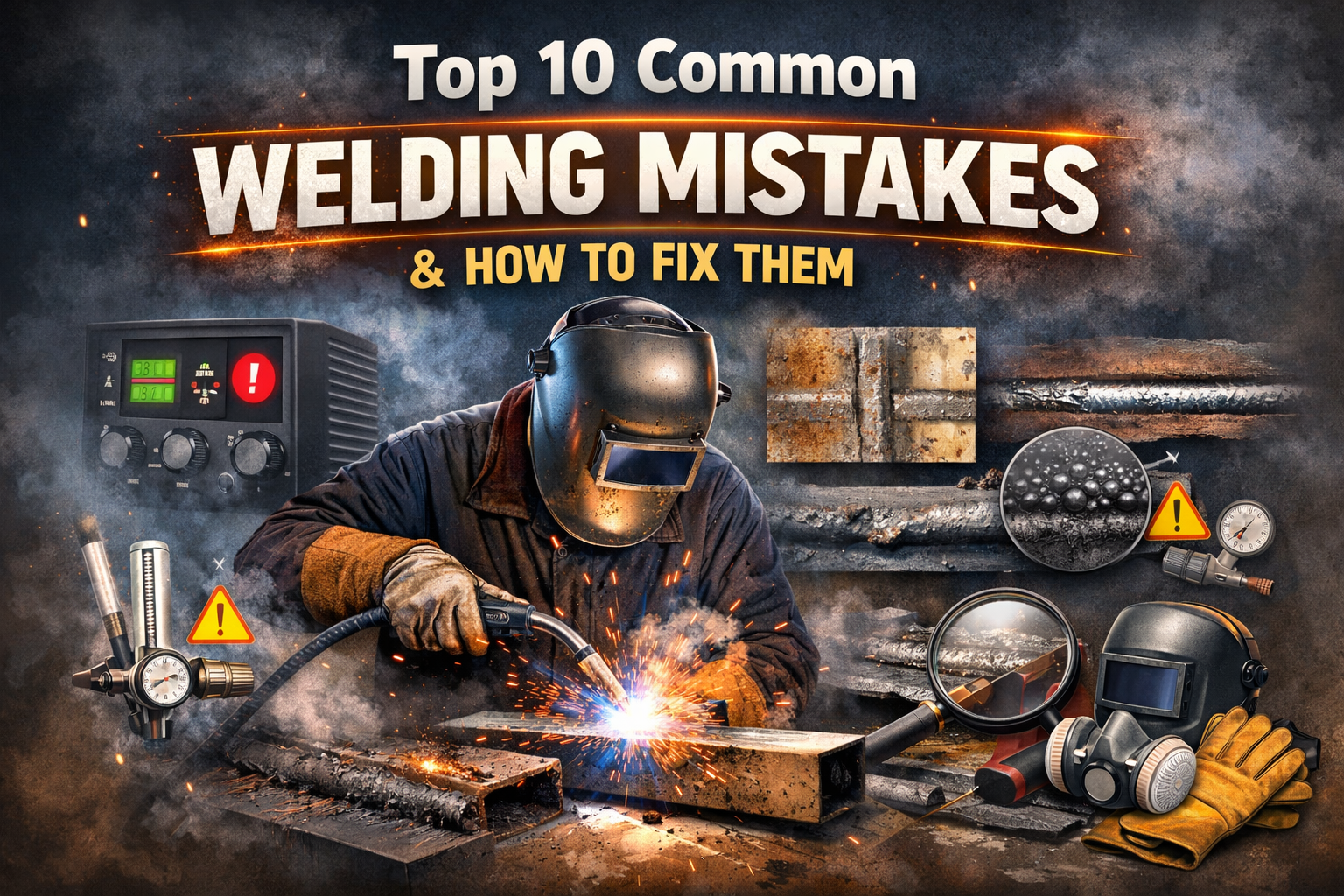
Welding is a critical process in industries such as manufacturing, construction, automotive, and fabrication. Whether you are a beginner welder or an experienced professional, mistakes can occur during welding operations. These mistakes can lead to weak welds, structural failures, costly rework, and safety hazards.
Understanding the most common welding mistakes and how to fix them can significantly improve weld quality, productivity, and safety in your workshop.
In this guide, we will explore the Top 10 Common Welding Mistakes and Practical Solutions to help welders produce stronger and more reliable welds.
1. Incorrect Welding Parameters
One of the most common welding mistakes is using incorrect welding settings such as voltage, amperage, or wire feed speed.
Incorrect parameters can cause problems like:
Lack of penetration

Excessive spatter
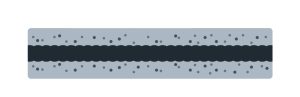
Burn-through

Weak weld joints
How to Fix It
Always follow the recommended welding parameters provided in the Welding Procedure Specification (WPS).
Tips:
Adjust voltage and amperage according to material thickness
Check wire feed speed for MIG welding
Perform test welds before starting production
Proper welding parameters ensure better arc stability and weld penetration.
2. Poor Joint Preparation
Many weld failures occur because the base metal was not properly prepared before welding.
Common preparation mistakes include:
Rust or dirt on metal surfaces
Oil or grease contamination
Incorrect joint gap
These contaminants can cause porosity and weak weld joints.
How to Fix It
Always clean the material before welding.
Recommended preparation methods include:
Grinding the surface
Wire brushing
Degreasing with solvent
Proper joint preparation improves weld penetration and strength.
3. Incorrect Welding Technique
Using the wrong welding technique can lead to poor weld appearance and structural weakness.
Common technique errors include:
Incorrect torch angle
Moving too fast or too slow
Inconsistent arc length
How to Fix It
Maintain the correct welding technique:
Keep the torch angle between 10–15 degrees
Maintain a consistent travel speed
Keep a stable arc length
Practicing proper technique improves weld bead consistency and quality.
4. Using the Wrong Filler Material
Choosing the wrong filler metal is another common welding mistake. Different metals require specific filler materials to achieve proper bonding.
Using the wrong filler material can cause:
Cracking
Weak weld joints
Poor corrosion resistance
How to Fix It
Select filler materials that match the base metal.
Examples:
Stainless steel requires stainless filler wire
Aluminum requires aluminum filler rods
Always consult welding standards or supplier recommendations.
5. Poor Gas Shielding
Gas shielding is essential in processes like MIG welding and TIG welding. Improper shielding gas can lead to porosity, oxidation, and contamination in the weld.
Common mistakes include:
Incorrect gas flow rate
Gas leaks
Wind interference during outdoor welding
How to Fix It
To ensure proper shielding:
Maintain gas flow rate between 20–25 CFH (typical range)
Check gas hoses and regulators for leaks
Use wind barriers when welding outdoors
Proper shielding protects the molten weld pool from contamination.
6. Lack of Penetration
Lack of penetration occurs when the weld does not fully fuse with the base metal. This can significantly weaken the joint.
Common causes include:
Low welding current
Fast travel speed
Improper joint design
How to Fix It
To improve penetration:
Increase welding amperage
Slow down the travel speed
Improve joint design with proper beveling
Good penetration ensures strong and durable welds.
7. Excessive Spatter
Excessive spatter is a common issue in MIG welding. Spatter not only affects weld appearance but also increases post-weld cleanup time.
How to Fix It
To reduce spatter:
Adjust voltage and wire feed speed
Maintain proper stick-out distance
Use anti-spatter spray
Optimizing welding settings will significantly reduce spatter.
8. Overheating the Material
Excessive heat input can distort metal parts and weaken weld structures. Thin materials are especially vulnerable to overheating.
How to Fix It
Control heat input by:
Reducing amperage
Increasing travel speed
Using intermittent welding techniques
Heat control is essential for maintaining dimensional accuracy.
9. Poor Weld Inspection
Skipping proper inspection can allow welding defects to go unnoticed.
Common welding defects include:
Cracks

Porosity

Undercut

Incomplete fusion

How to Fix It
Implement proper weld inspection procedures, including:
Visual inspection
Non-destructive testing (NDT)
Weld quality documentation
Regular inspection ensures compliance with industry standards.
10. Inadequate Welding Safety Practices
Welding involves risks such as burns, electric shock, and toxic fumes. Ignoring safety practices can lead to serious injuries.
How to Fix It
Always follow welding safety guidelines:
Wear proper PPE such as welding helmets and gloves
Use fume extraction systems
Ensure proper ventilation in welding areas
Safety should always be a top priority in welding operations.
Conclusion
Welding mistakes can lead to poor weld quality, structural failures, and increased production costs. By understanding the most common welding mistakes and how to fix them, welders can improve their skills and produce stronger, more reliable welds.
Proper welding techniques, correct equipment settings, and adherence to safety standards are essential for achieving high-quality results in welding operations.
Whether you are a beginner learning the fundamentals or a professional welder looking to improve productivity, avoiding these common mistakes will help ensure consistent welding performance and better project outcomes.
10 Kesilapan Biasa dalam Kimpalan dan Cara Mengatasinya
Kimpalan merupakan proses yang sangat penting dalam industri seperti pembuatan, pembinaan, automotif dan fabrikasi. Sama ada anda seorang pengimpal baru atau profesional berpengalaman, kesilapan masih boleh berlaku semasa proses kimpalan.
Kesilapan ini boleh menyebabkan sambungan kimpalan yang lemah, kegagalan struktur, kos pembaikan yang tinggi dan risiko keselamatan.
Memahami kesilapan kimpalan yang paling biasa dan cara mengatasinya dapat membantu meningkatkan kualiti kimpalan, produktiviti, dan keselamatan di tempat kerja.
Dalam panduan ini, kita akan melihat 10 kesilapan kimpalan yang biasa serta penyelesaiannya untuk membantu menghasilkan kimpalan yang lebih kuat dan berkualiti.
1. Parameter Kimpalan Tidak Betul
Salah satu kesilapan paling biasa ialah menggunakan tetapan kimpalan yang tidak tepat seperti voltan, arus (ampere) atau kelajuan suapan dawai.
Kesannya:
- Penembusan tidak mencukupi
- Percikan berlebihan
- Burn-through
- Sambungan kimpalan lemah
Cara Mengatasi
Sentiasa rujuk parameter dalam Welding Procedure Specification (WPS).
Tips:
- Laraskan voltan dan arus mengikut ketebalan bahan
- Semak kelajuan suapan dawai (MIG)
- Lakukan ujian kimpalan sebelum mulakan produksi
2. Penyediaan Sambungan Tidak Sempurna
Kegagalan kimpalan sering berlaku kerana permukaan logam tidak disediakan dengan baik.
Kesilapan biasa:
- Permukaan berkarat atau kotor
- Tercemar dengan minyak atau gris
- Jurang sambungan tidak betul
Ini boleh menyebabkan porositi dan kimpalan lemah.
Cara Mengatasi
Pastikan bahan dibersihkan sebelum kimpalan:
- Grinding permukaan
- Wire brushing
- Membersihkan dengan pelarut
3. Teknik Kimpalan Tidak Betul
Teknik yang salah boleh menyebabkan kualiti kimpalan rendah.
Kesilapan biasa:
- Sudut torch tidak betul
- Pergerakan terlalu laju atau perlahan
- Panjang arka tidak konsisten
Cara Mengatasi
- Kekalkan sudut 10–15 darjah
- Kawal kelajuan pergerakan
- Pastikan arka stabil
4. Penggunaan Filler Material Salah
Setiap logam memerlukan bahan pengisi yang sesuai.
Jika salah, boleh menyebabkan:
- Retakan
- Kimpalan lemah
- Ketahanan kakisan rendah
Cara Mengatasi
Gunakan filler yang sesuai:
- Stainless steel → filler stainless
- Aluminium → filler aluminium
5. Perlindungan Gas Tidak Mencukupi
Gas shielding penting untuk MIG dan TIG.
Masalah biasa:
- Kadar aliran gas tidak betul
- Kebocoran gas
- Gangguan angin
Cara Mengatasi
- Kekalkan aliran gas 20–25 CFH
- Periksa hos dan regulator
- Gunakan pelindung angin
6. Penembusan Tidak Mencukupi
Kimpalan tidak menembusi sepenuhnya ke dalam logam.
Punca:
- Arus terlalu rendah
- Pergerakan terlalu laju
- Reka bentuk sambungan tidak sesuai
Cara Mengatasi
- Tingkatkan arus
- Kurangkan kelajuan
- Gunakan bevel pada sambungan
7. Percikan Berlebihan (Spatter)
Masalah biasa dalam MIG welding.
Cara Mengatasi
- Laraskan voltan dan wire feed
- Kawal jarak torch
- Gunakan anti-spatter spray
8. Terlalu Panas (Overheating)
Haba berlebihan boleh menyebabkan:
- Logam berubah bentuk
- Struktur lemah
Cara Mengatasi
- Kurangkan arus
- Tingkatkan kelajuan
- Gunakan teknik kimpalan berselang
9. Pemeriksaan Kimpalan Tidak Dilakukan
Jika tiada pemeriksaan, kecacatan mungkin tidak dikesan.
Contoh kecacatan:
- Retak
- Porositi
- Undercut
- Fusion tidak lengkap
Cara Mengatasi
- Pemeriksaan visual
- Ujian tanpa musnah (NDT)
- Dokumentasi kualiti
10. Amalan Keselamatan Tidak Mencukupi
Kimpalan melibatkan risiko:
- Melecur
- Renjatan elektrik
- Gas berbahaya
Cara Mengatasi
- Pakai PPE lengkap
- Gunakan sistem pengekstrakan asap
- Pastikan pengudaraan baik
Kesimpulan
Kesilapan dalam kimpalan boleh menyebabkan kualiti rendah, kegagalan struktur, dan kos tinggi. Dengan memahami kesilapan biasa dan cara mengatasinya, pengimpal boleh meningkatkan kemahiran serta menghasilkan kimpalan yang lebih kuat dan selamat.
Penggunaan teknik yang betul, tetapan mesin yang tepat, dan pematuhan kepada standard keselamatan adalah kunci kepada hasil kimpalan yang berkualiti tinggi.
Sama ada anda seorang pemula atau profesional, mengelakkan kesilapan ini akan membantu memastikan prestasi kimpalan yang konsisten dan hasil kerja yang lebih baik.
Tel.: 05-3665621 / 019-3132353
Email: info@weldmart.com.my
Address: No. 3 & 3A, Persiaran Batu Gajah Perdana 7,
Pusat Komersial Batu Gajah Perdana,
31550 Pusing, Perak.