
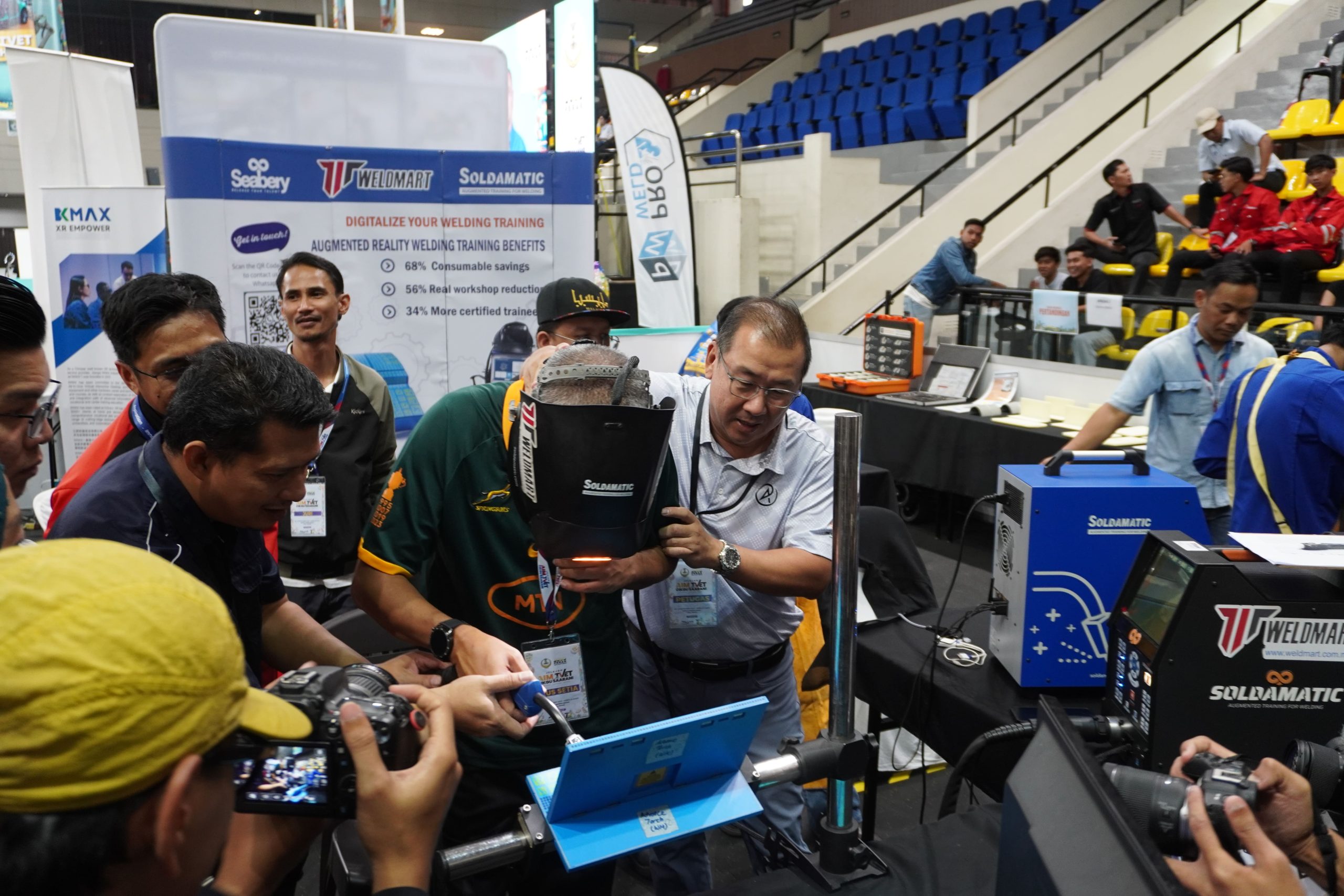
The welding industry is rapidly evolving alongside Industry 4.0, where digitalization, automation, data analytics, and smart technologies are redefining how technical skills are developed, assessed, and certified. As manufacturing and construction sectors demand higher precision, efficiency, and safety standards, traditional methods of skills training and evaluation are no longer sufficient on their own. One of the most impactful innovations supporting this transformation is the emergence of E-Welding Competitions using welding simulators.
These next-generation competitions provide a modern, safe, and highly effective platform to evaluate welding competencies while inspiring excellence among students, trainees, and industry professionals. By combining advanced simulation technology with competency-based assessment, E-Welding Competitions represent a major shift toward digital and data-driven skills development.
What are E-Welding Competitions?
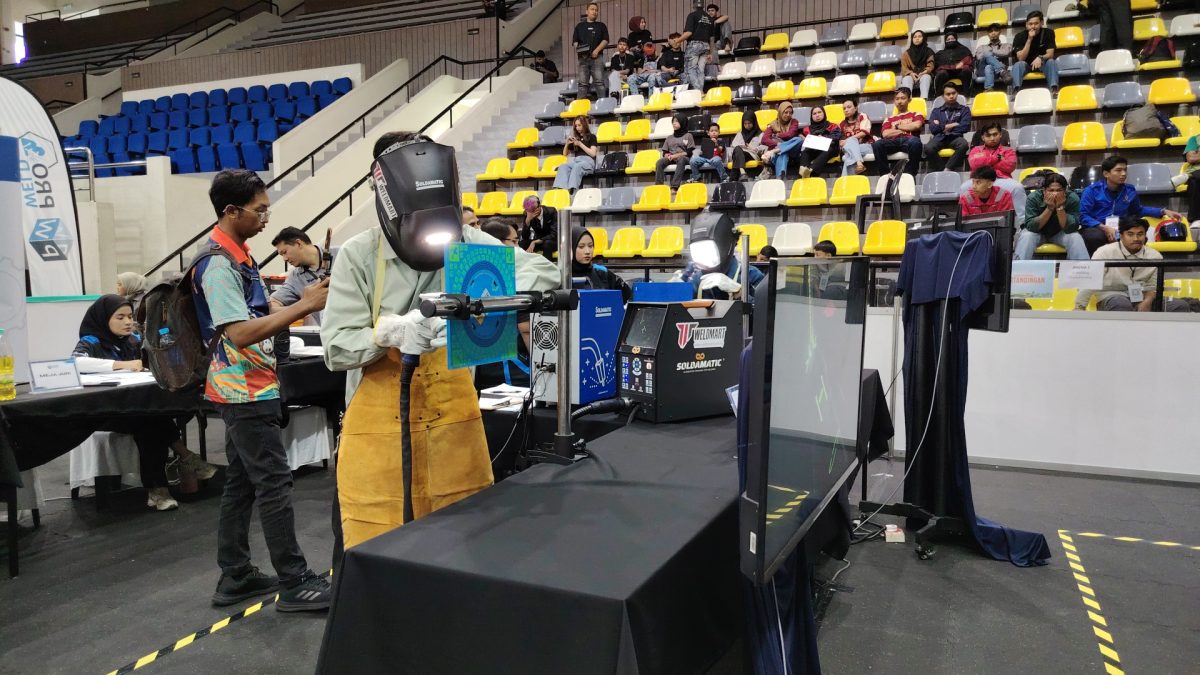
E-Welding Competitions are skill-based contests conducted using advanced welding simulator systems instead of conventional live welding equipment. Participants perform simulated welding tasks that closely replicate real welding operations, including commonly used processes such as MIG/MAG, TIG, and Stick (MMA) welding. The simulators recreate realistic welding scenarios, joint configurations, and working positions, allowing participants to demonstrate both technical knowledge and hands-on skills.
During each task, the simulator records and analyses every movement, parameter, and technique in real time. Critical performance indicators such as torch angle, travel speed, arc length, heat input, stability, and accuracy are measured with high precision. The system then generates objective performance data that can be used for assessment, scoring, and ranking.
These competitions can be organized at institutional, regional, national, or international levels, making them suitable for a wide range of applications. TVET institutions, skills competition organizers, industry partners, and training providers can all benefit from adopting simulator-based competitions as part of their skills development and assessment initiatives.
Why Use Simulators for Welding Competitions?
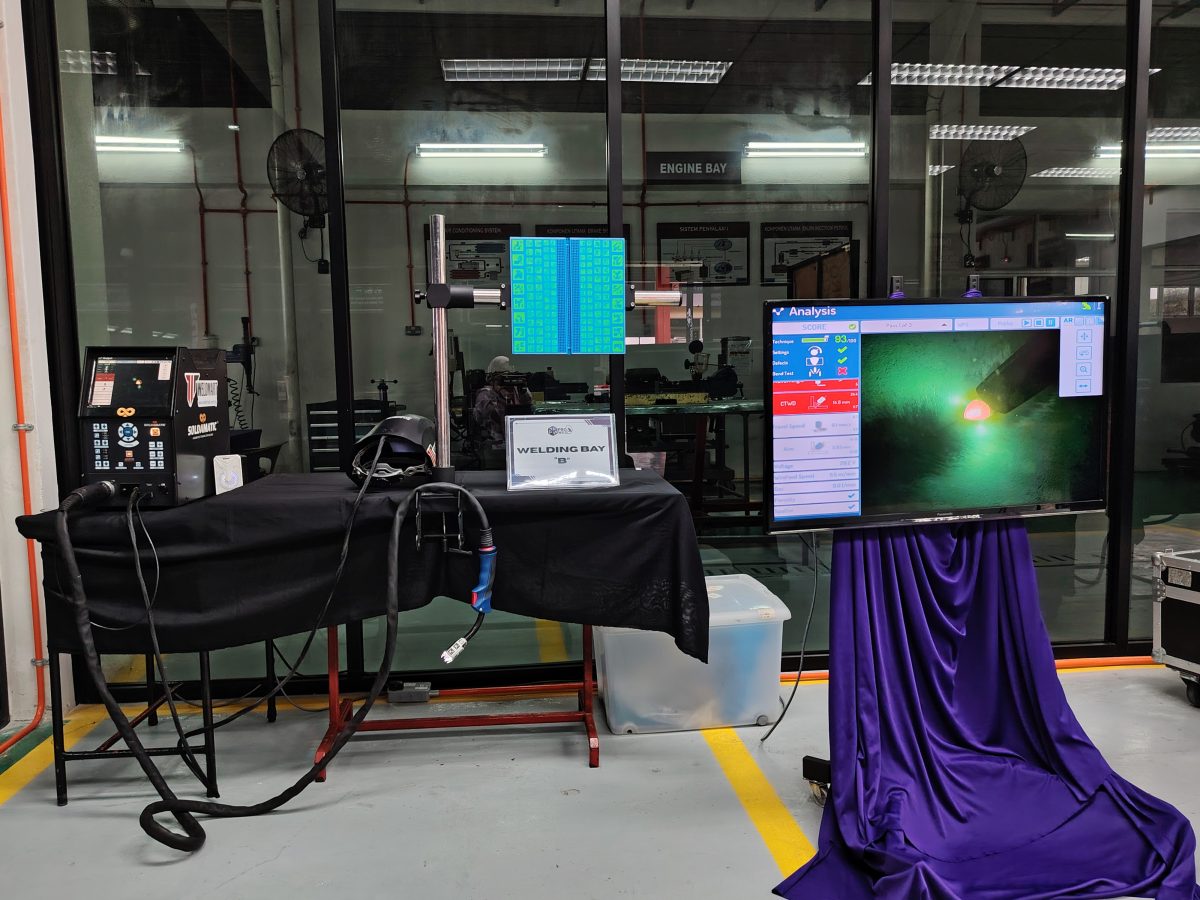
Welding simulators offer numerous advantages that make them highly suitable for competitive environments, particularly when consistency, safety, and fairness are critical.
1. Objective and Fair Assessment
Unlike conventional welding competitions that rely heavily on visual inspection and subjective judgement, simulators provide data-driven and standardized assessment. Each participant is evaluated using the same criteria, based on precise measurements of welding parameters such as angle, speed, arc control, and accuracy. This ensures transparent scoring and fair comparison between competitors, enhancing the credibility and reliability of competition outcomes.
2. Safe and Environmentally Friendly
Since no real arc, heat, fumes, or molten metal are involved, E-Welding Competitions significantly reduce safety risks. This creates a controlled and hazard-free environment for participants, judges, and spectators. Additionally, the absence of emissions and waste supports environmentally responsible practices, making simulator-based competitions suitable for indoor venues, public spaces, and exhibitions without the need for specialized safety infrastructure.
3. Cost-Effective and Sustainable
Traditional welding competitions require significant resources, including consumables such as electrodes, filler materials, shielding gas, metal plates, and personal protective equipment. In contrast, simulator-based competitions eliminate or greatly reduce these costs. This makes E-Welding Competitions a cost-effective and sustainable solution, particularly for institutions and organizers operating with limited budgets.
4. Repeatable and Standardized Tasks
Simulators allow organizers to design identical tasks with fixed difficulty levels for all participants. Exercises can be repeated, paused, reset, or adjusted easily, ensuring consistent competition conditions. This repeatability also allows participants to practice and improve, reinforcing learning through structured and measurable performance.
Enhancing Skills Development Through Competition
E-Welding Competitions go beyond awarding medals or prizes; they play a vital role in skills development and learning enhancement. Participants receive instant feedback and detailed performance reports after each task, enabling them to understand their strengths, weaknesses, and areas for improvement.
This data-driven feedback encourages reflective learning and continuous improvement, which are essential principles in modern vocational education. For TVET students, participation in competitions helps build confidence, motivation, and discipline while exposing them to industry-relevant standards. For instructors and trainers, simulator-generated data provides valuable insights into learner performance, helping to identify training gaps and improve instructional strategies.
Aligning with TVET and Industry Needs
With the increasing demand for highly skilled and job-ready welders, E-Welding Competitions align strongly with Competency-Based Education and Training (CBET) and Outcomes-Based Education (OBE) frameworks. The measurable performance indicators generated by simulators support evidence-based assessment and benchmarking against industry requirements.
Industries also benefit by using E-Welding Competitions as a talent identification and recruitment platform. Employers can evaluate participants based on verified performance data rather than subjective observation alone, making it easier to identify high-potential candidates with strong technical competencies and consistent performance.
Ideal for Modern Skills Events
E-Welding Competitions are well-suited for a wide range of modern skills events, including:
TVET and polytechnic skills challenges
National and international skills competitions
Industry open days and technology exhibitions
Youth skills development and outreach programs
Corporate training, upskilling, and assessment events
Their interactive and high-tech nature attracts public interest and engagement, making them an excellent showcase for modern vocational training and digital skills development.
Conclusion
E-Welding Competitions using simulators represent the future of welding skills assessment combining advanced technology, fairness, safety, sustainability, and educational value in one powerful platform. By embracing simulation-based competitions, TVET institutions and industry stakeholders can elevate skills standards, motivate learners, and prepare a new generation of welders to meet the challenges of modern manufacturing, fabrication, and construction sectors with confidence and competence.
Video: e-Welding Championship
Interested to host e-Welding Competition? Contact us now!
Tel: 05-3665621 / 019-3132353
Email: info@weldmart.com.my
Address: No. 3 & 3A, Persiaran Batu Gajah Perdana 7,
Pusat Komersial Batu Gajah Perdana,
31550 Pusing, Perak.