
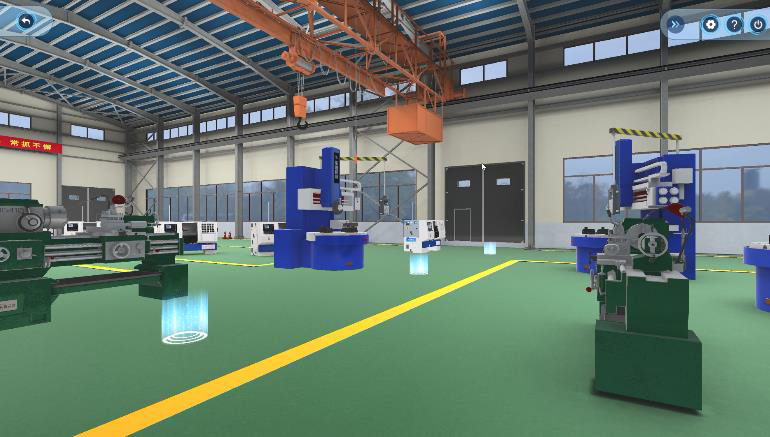
In modern manufacturing and technical education, mastering lathe machine operations is a fundamental skill for machinists, engineers, and vocational students. Lathe machining forms the backbone of precision manufacturing, producing critical components for industries such as automotive, aerospace, electronics, oil and gas, and industrial equipment.
Traditionally, learning lathe operations requires access to physical machines in workshop environments. While hands-on training remains essential, it also introduces several challenges including safety risks, high material costs, limited machine availability, and difficulty scaling training for large groups of students.
Today, lathe machine simulation software is transforming how machining skills are taught. By recreating real machining environments in a virtual platform, this technology enables learners to develop practical skills safely, efficiently, and cost-effectively.
What is Lathe Machine Simulation Software?
Lathe machine simulation software is an interactive digital training platform designed to replicate the behavior, controls, and processes of real lathe machines in a virtual workshop environment.
Using realistic 3D simulations, learners can:
-
Operate virtual lathe machines
-
Practice machining procedures
-
Write and test G-code programs
-
Simulate cutting operations
-
Visualize tool movements and machining processes
This technology bridges the gap between theoretical knowledge and real-world machining practice, enabling students to gain valuable experience before operating physical machines.
Many modern machining simulation platforms replicate CNC lathe systems, including machine axis movements, tool changes, spindle operations, and material removal processes. This allows learners to develop a deeper understanding of machining principles without requiring immediate access to expensive workshop equipment.
Why Lathe Simulation Software is Essential for Modern Training
1. Safer Learning Environment
Machining involves high-speed rotating parts, sharp cutting tools, and heavy components. For beginners, these factors can pose significant safety risks.
Lathe simulation software provides a completely safe training environment, allowing learners to practice machining operations without exposure to physical hazards.
Students can experiment, make mistakes, and refine their techniques without the risk of accidents or equipment damage.
2. Cost-Effective Machining Training
Traditional machining training requires substantial resources, including:
-
Raw materials
-
Cutting tools
-
Machine maintenance
-
Power consumption
-
Instructor supervision
Repeated practice often results in wasted materials and tool wear, increasing operational costs for educational institutions and training centre.
Simulation software eliminates these costs by enabling unlimited virtual practice without consuming physical resources.
This makes CNC lathe training significantly more affordable and scalable, particularly for technical schools and vocational training programs.
3. Improved Skill Development
Unlike passive learning methods such as textbooks or lectures, simulation software provides interactive and hands-on training experiences.
Students can actively explore machining processes, test different strategies, and immediately observe how their actions affect machining outcomes.
Through repeated practice, learners develop key machining competencies such as:
-
Understanding machining sequences
-
Writing and optimizing G-code
-
Toolpath planning
-
Cutting parameter adjustments
-
Machine setup logic
This interactive approach significantly enhances knowledge retention and technical confidence.
4. Unlimited Practice and Flexibility
One of the most valuable advantages of machining simulation software is the ability to practice repeatedly without limitations.
Students can:
-
Repeat exercises multiple times
-
Experiment with different cutting strategies
-
Troubleshoot machining errors
-
Learn at their own pace
Unlike traditional workshops where machine availability limits training time, simulation software allows continuous learning.
This flexibility is particularly beneficial for technical colleges, universities, and training centre with large student populations.
Key Features of Lathe Machine Simulation Software
Modern lathe simulation platforms offer advanced capabilities designed to closely replicate real machining environments.
Realistic Virtual Machine Models
Simulation software creates highly detailed 3D models of lathe machines, including:
-
Spindles
-
Tool turrets
-
Tool holders
-
Slides and axes
-
Work holding systems such as chucks
These virtual machines behave similarly to real CNC lathes, allowing learners to observe machine movement and cutting operations in real time.
G-Code Programming and Verification
Machining simulation software enables learners to write and test CNC G-code programs within the simulation environment.
Users can:
-
Create and edit machining programs
-
Simulate tool movements
-
Observe machining sequences
-
Verify program accuracy before running real machines
This process helps learners understand how programming instructions translate into actual machine motion.
Collision Detection and Error Prevention
Advanced simulation platforms include collision detection systems that identify potential conflicts between tools, workpieces, and machine components.
When errors occur, the system provides alerts and warnings, helping users correct mistakes before they become costly problems in real-world machining environments.
This feature improves both safety awareness and programming accuracy.
Visual Toolpath Simulation
Instead of relying solely on code interpretation, simulation software visually displays toolpaths and cutting trajectories.
Learners can clearly see:
-
Tool engagement with material
-
Feed rate and cutting movements
-
Toolpath geometry
-
Material removal processes
This visual feedback helps students understand how machining parameters influence final part quality.
Who Benefits from Lathe Simulation Software?
Technical and Vocational Students
Students in TVET institutions, vocational colleges, and engineering schools benefit greatly from simulation-based training.
The software allows them to practice machining skills even when workshop access is limited.
By the time students enter the physical workshop, they already understand machine operations and programming concepts.
Educators and Trainers
Simulation tools provide instructors with powerful teaching resources.
Educators can:
-
Assign virtual machining exercises
-
Monitor student performance
-
Evaluate programming accuracy
-
Integrate simulation into curriculum plans
This allows training programs to expand without being limited by the number of physical machines available.
Manufacturing Industry Professionals
Manufacturing companies also use machining simulation software for:
-
CNC operator training
-
Program verification
-
Process optimization
-
Troubleshooting machining strategies
By testing programs virtually, manufacturers can reduce scrap rates, improve machining efficiency, and prevent costly machine crashes.
The Future of Machining Education
The manufacturing industry is rapidly evolving with the integration of digital technologies and Industry 4.0 concepts.
Lathe machine simulation software represents a powerful combination of digital learning, practical training, and advanced manufacturing education.
Organizations that adopt simulation technology can achieve:
-
Faster training of new machinists
-
Reduced training costs
-
Improved safety outcomes
-
Higher operator confidence and skill levels
As machining complexity continues to increase, simulation-based learning will play an increasingly important role in preparing future machinists and engineers.
Conclusion
Lathe machine simulation software is becoming a cornerstone of modern machining education. By combining realistic machine behaviour, interactive programming environments, and risk-free experimentation, this technology bridges the gap between classroom learning and practical machining experience.
For educational institutions, training centres, and manufacturing companies, adopting simulation technology offers a powerful way to enhance training quality while reducing operational costs.
By integrating CNC lathe simulation into training programs, organizations can develop highly skilled machinists who are prepared to meet the demands of today’s precision manufacturing industry.
Contact us now for more details!
Tel: 05-3665621 / 019-3132353
Email: info@weldmart.com.my
Address: No. 3 & 3A, Persiaran Batu Gajah Perdana 7,
Pusat Komersial Batu Gajah Perdana,
31550 Pusing, Perak.