
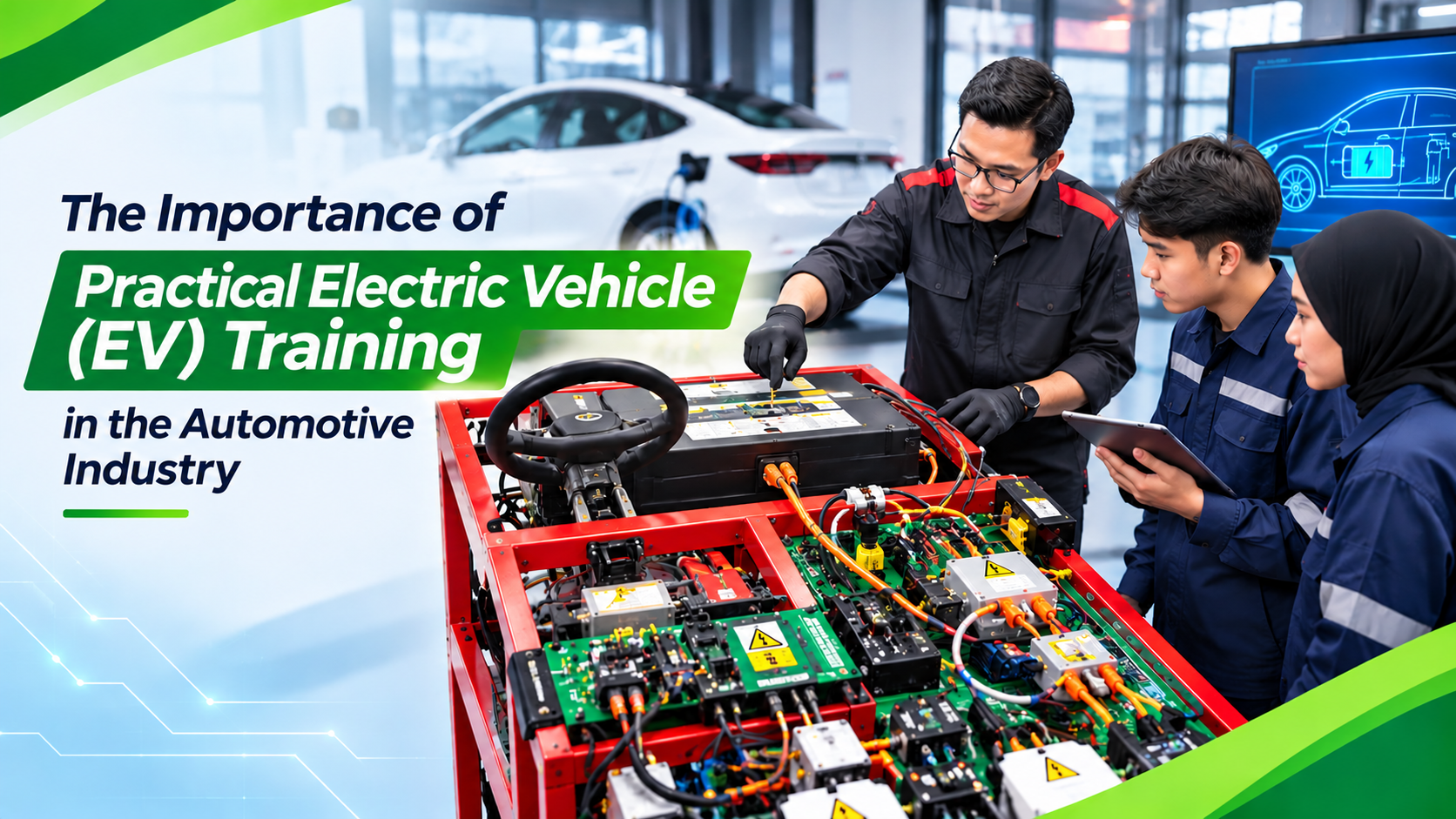
The automotive industry is experiencing a significant transformation with the increasing adoption of Electric Vehicle (EV). As the world moves towards cleaner and more sustainable transportation, electric mobility is becoming an important part of the future automotive landscape.
This transformation is also changing the skills and knowledge required from automotive technicians, engineers and technical professionals. Traditional automotive knowledge remains valuable, but the ability to understand electric powertrains, battery technology, electrical systems and electronic vehicle controls is becoming increasingly important.
As a result, technical education and practical training play a crucial role in preparing the next generation of skilled workers for the evolving automotive industry.
1. Understanding the Technology Behind Electric Vehicles
Unlike conventional internal combustion engine vehicles, electric vehicles rely on integrated electrical and electronic systems to operate.
Some of the key technologies include:
Battery Systems: Store and supply electrical energy to power the vehicle.
Electric Motors: Convert electrical energy into mechanical power to drive the vehicle.
Power Electronics: Manage electrical power conversion and distribution between different systems.
Vehicle Control Systems: Coordinate vehicle operations through electronic control units.
Charging Systems: Manage the process of transferring electrical energy into the vehicle battery.
Understanding how these systems interact is essential for anyone pursuing a career in electric vehicle maintenance, diagnostics and technical support.
2. The Importance of Hands-On Technical Training
Learning about electric vehicle technology through theoretical lessons alone may not provide sufficient exposure to the systems used in real-world applications.
Practical training allows students to understand how individual components function and how different systems communicate and operate together.
Through hands-on activities, students can develop important technical competencies such as:
Identifying and understanding EV components.
Understanding electrical power distribution.
Performing electrical measurements.
Learning basic system diagnostics.
Understanding vehicle control and operating logic.
Developing systematic troubleshooting skills.
This approach creates a stronger connection between classroom learning and the technical requirements of the automotive industry.
3. Developing EV Skills Through TVET Education
Technical and Vocational Education and Training (TVET) institutions have an important role in developing a workforce equipped with relevant technical competencies.
As electric mobility continues to evolve, training institutions need to consider incorporating EV-related learning into their technical programmes.
By introducing practical EV training, students can gain early exposure to emerging automotive technologies and develop a better understanding of the industry’s changing requirements.
Training programmes should ideally combine theoretical knowledge, practical exercises and equipment-based learning to provide a more comprehensive educational experience.
4. Safety Awareness in Electric Vehicle Training
Safety is an essential consideration when learning and working with electric vehicle systems.
EV technology involves high-voltage electrical components and specialized systems that require proper understanding and handling procedures.
Technical training should therefore introduce students to important safety considerations, including:
High-voltage system awareness.
Electrical hazard identification.
Understanding isolation and safety procedures.
Appropriate use of measuring instruments.
Safe working practices during inspection and diagnostics.
Proper safety awareness helps students develop responsible working habits before entering actual automotive service environments.
Practical exercises involving high-voltage systems should always be conducted under qualified supervision and according to appropriate safety procedures.
5. Preparing for the Future of Automotive Technology
The transition towards electric mobility creates new opportunities for technical education providers, automotive service centres and industry professionals.
Developing relevant skills today can help prepare students for future roles involving electric vehicle maintenance, system diagnostics, electrical engineering and automotive technology.
For training institutions, investing in suitable educational equipment is one way to strengthen practical learning and provide students with exposure to modern automotive systems.
Supporting Practical EV Education with the Right Training Equipment
To support the development of EV technical competencies, training institutions require suitable equipment that allows students to explore and understand electric vehicle systems in a structured learning environment.
Weldmart supports technical education and industrial training through specialized equipment and training solutions.
One of the solutions available is the Weldmart 20kW EV Training Bench, a purpose-built educational platform featuring actual EV powertrain and vehicle control components. It provides opportunities for hands-on learning, component identification, system understanding, measurement and diagnostic demonstrations.
Designed for TVET institutions, universities and technical training centres, the training bench helps bridge the gap between theoretical knowledge and practical exposure to electric vehicle technology.
As the automotive industry continues to evolve, investing in practical technical education is an important step towards building a skilled workforce for a cleaner and more sustainable mobility future.
Ready to Take the Next Step in EV Technical Training?
Equip your institution or training centre with the right solutions to support the future of electric vehicle technology.
Whether you are looking to introduce EV training programmes, upgrade your existing training facilities or explore suitable educational equipment, Weldmart is ready to support your technical training needs.
Discover how our 20kW EV Training Bench can support practical learning and help develop the next generation of skilled automotive professionals.
Contact Weldmart today to explore our EV training solutions and discuss your requirements.
Tel: +605-3665621 / +6019-3132353
Email: info@weldmart.com.my
Address: No. 3 & 3A, Persiaran BG Perdana 7,
Pusat Komersial BG Perdana,
31550 Pusing, Perak